At this point, we know marketing sells. Consumers are more savvy than ever when it comes to questioning the tips, tricks, and careful wording used to promote products. We read labels and challenge bold product claims. But when it comes to cookware, the language gets a little trickier, especially with one phrase that changes everything: "ceramic-coated cookware." See what we did there?
There’s a big difference between ceramic cookware and ceramic-coated cookware, and unfortunately, most viral, trendy, celebrity-endorsed brands fall into the second category.
So, what exactly is ceramic-coated cookware, and what happens when that coating scratches or wears down?
Lesson one: What is ceramic-coated cookware, really?
Many products marketed as "non-toxic" or "nonstick ceramic cookware" are not actually solid ceramic at all. More often than not, they’re metal (typically aluminum) pans coated with a silica-based material known as sol-gel, designed to create a smooth, nonstick surface. This coating can look and feel like ceramic, but it isn’t real ceramic. It’s a thin, engineered layer applied over metal, often aluminum for its heat conductivity and affordability.
This is the part most brands leave out: once the coating degrades through heat, utensils, scrubbing, or simply time, the metal underneath can become exposed.
The problem with calling these products “non-toxic”
Fun (terrifying) fact! There is no legal definition of the term "non-toxic" in cookware marketing. This means that common phrases brands use - such as "non-toxic," "family-safe," or "better than Teflon" - have no standardized regulatory definition behind them.
Some independent investigations have raised questions about what’s actually in certain ceramic-style coatings, including the presence of substances like titanium dioxide, siloxanes, and traces of heavy metals in some formulations. In certain jurisdictions, such as Washington State, regulators have introduced stricter requirements and requested greater transparency around materials used.
This doesn’t mean every ceramic-coated pan is unsafe, but it does highlight why many people ask whether ceramic-coated cookware is truly safe over time.
What happens when ceramic-coated cookware gets scratched or wears down?
With ceramic-coated cookware, the nonstick layer can degrade over time, and performance can decline quickly. Half of your scrambled eggs end up stuck to the pan. Once the aluminum core becomes exposed, you’re no longer cooking on the material you thought you bought.
While marketed as heat-resistant, testing shows the sol-gel (silica) bond in most coatings begins to degrade at just 454.3°F. A standard sear or a preheated air fryer can hit this threshold in minutes. Dishwashers can also contribute to the breakdown of the silicon oil due to the combination of hot water, harsh detergents, and aggressive sprays. Data shows nonstick efficacy can decline after only 15 to 40 hours of cumulative use, permanently compromising its properties.
Because these coatings are sprayed onto metal, the layer is thinnest at the rims. These micro-edges are the first to chip from spatulas or stacking pots. Once the edge is compromised, heat and moisture can get beneath the layer, causing the coating to lift and peel from the reactive metal core. As this wear occurs, small amounts of the coating can break down and mix into your food.
How can you tell if your pan’s coating is wearing off?
- The surface looks dull instead of glassy (this means the top layer has eroded down).
- The edges feel rough or sharp to the touch (this means metal underneath is exposed).
- The pan develops dark spots in the center indicating the coating is thin enough to scorch it.
What is ceramic cookware?
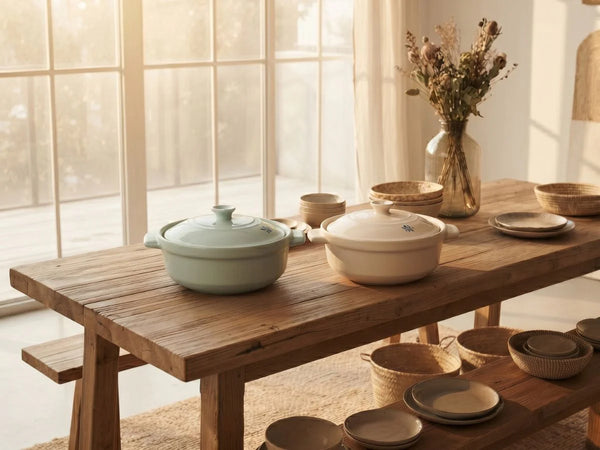
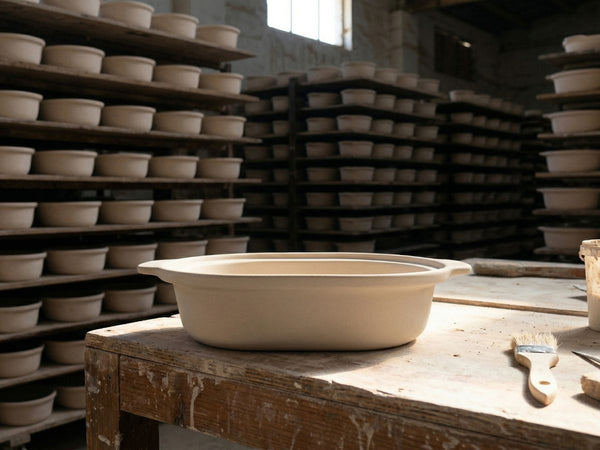
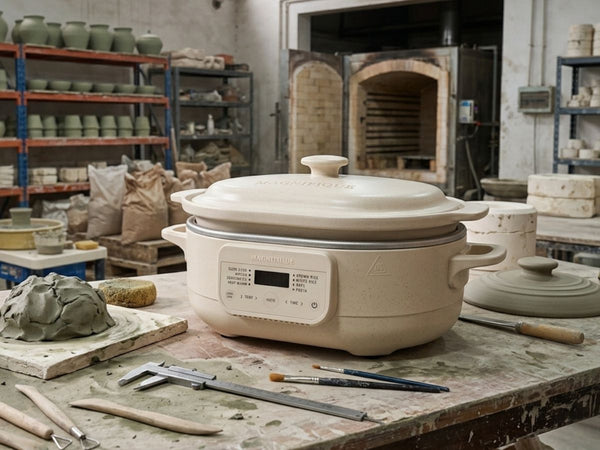
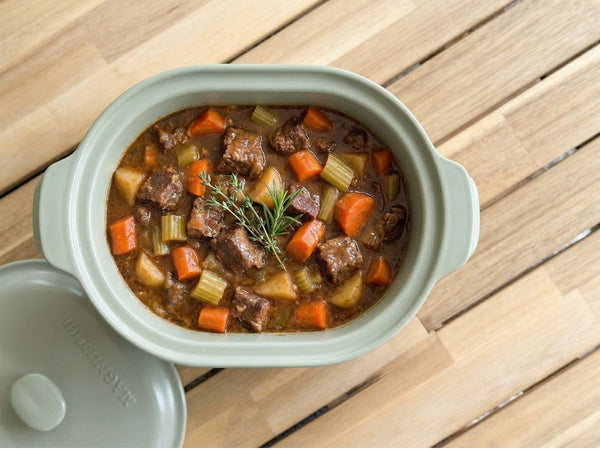
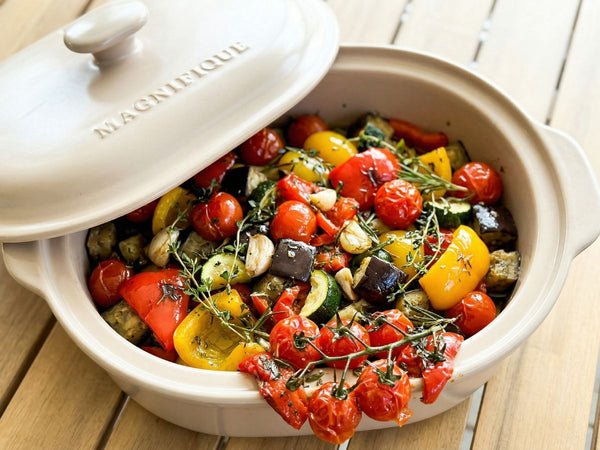
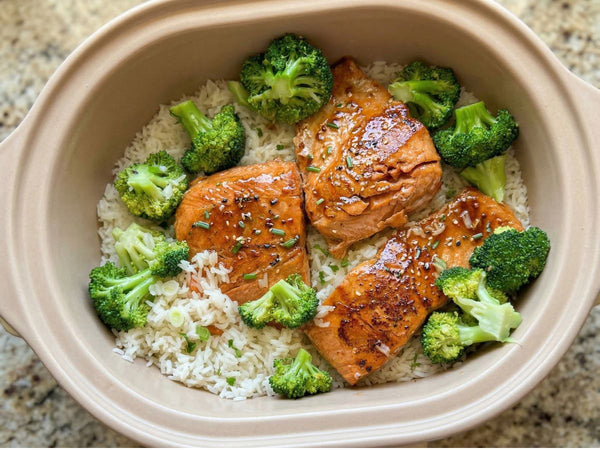
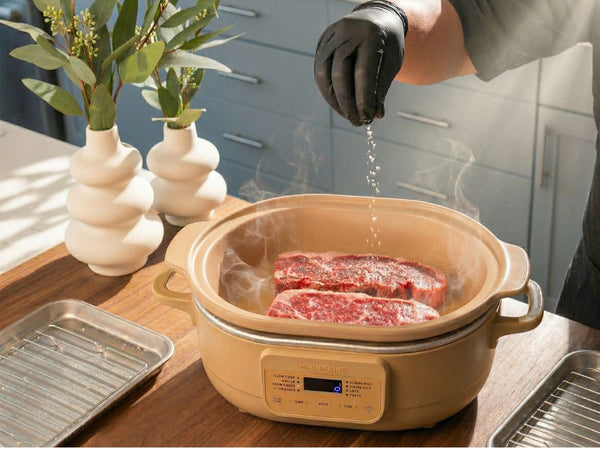
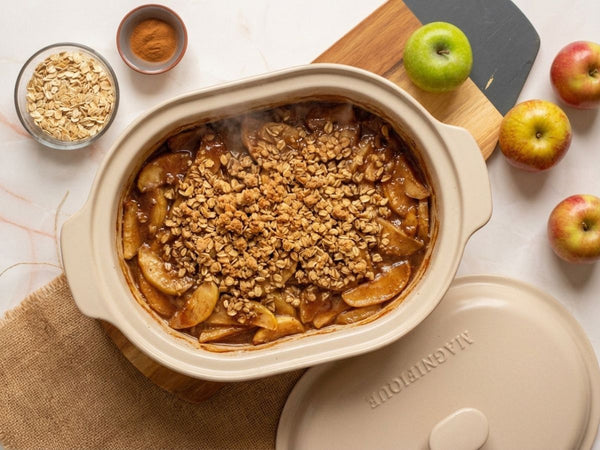
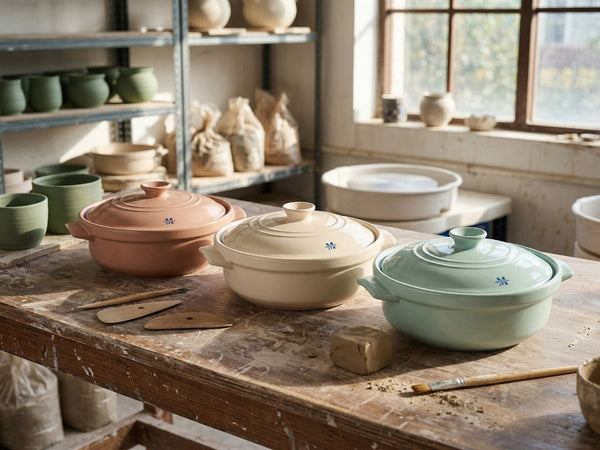
True ceramic cookware is made from natural clay and fired at extremely high temperatures. It is naturally non-reactive, free from synthetic coatings, and structurally consistent throughout. There is nothing to “peel” or “wear off” because it is solid.
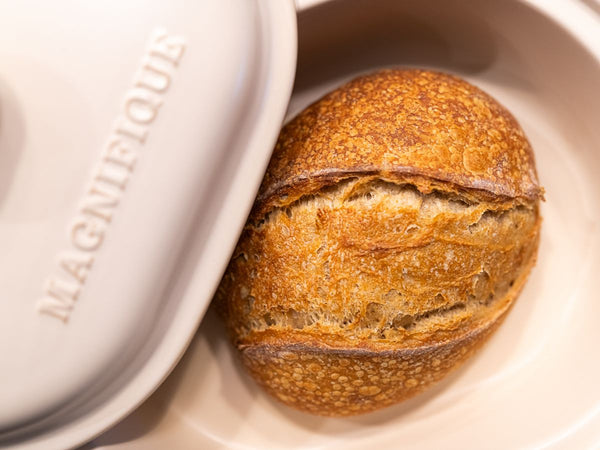
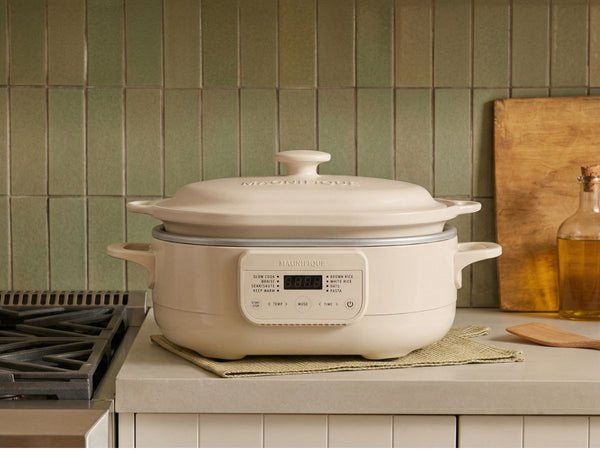
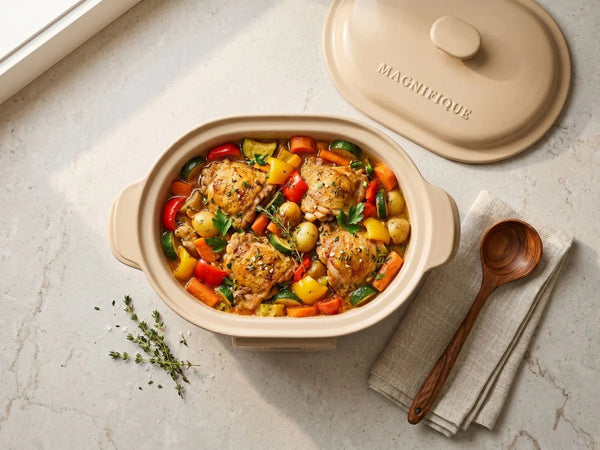
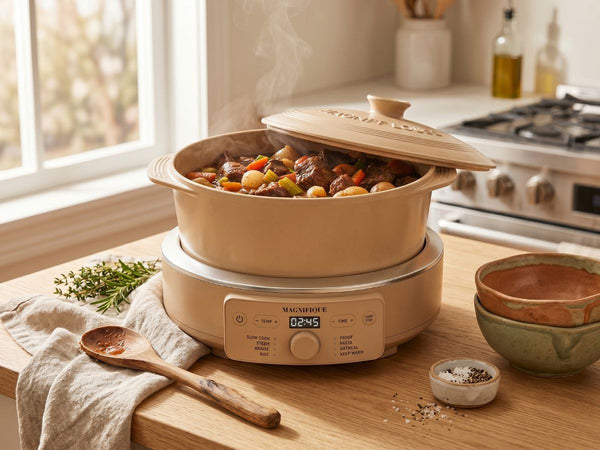
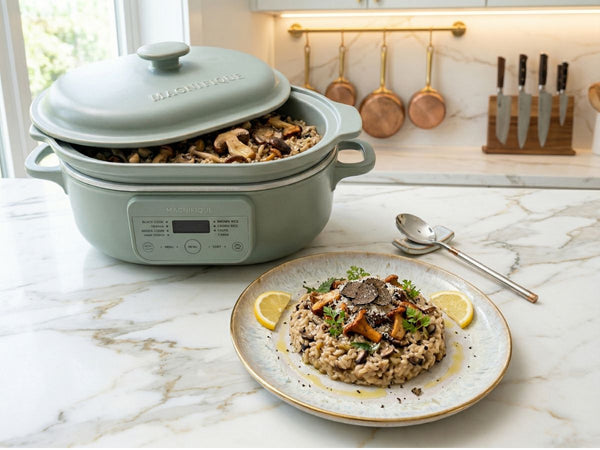
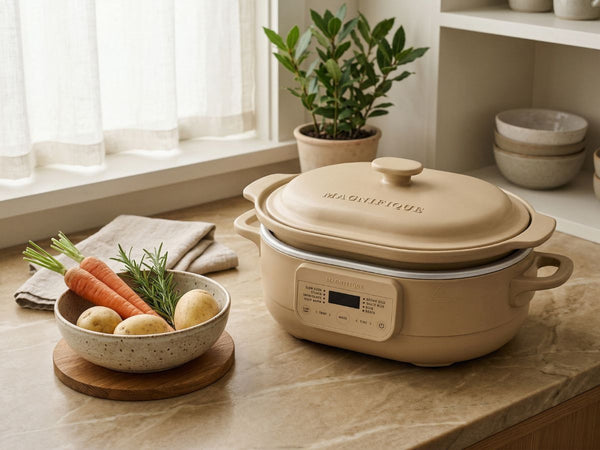
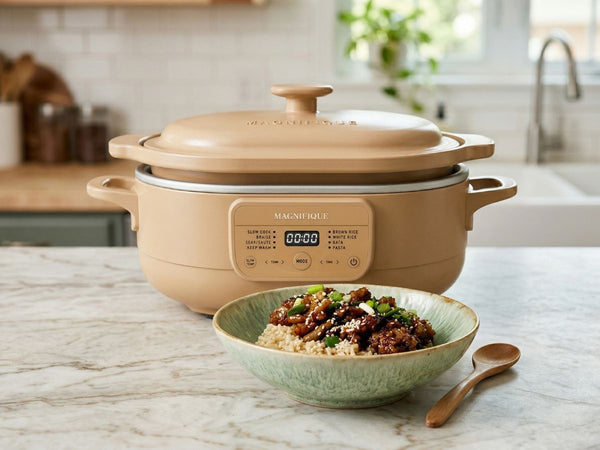
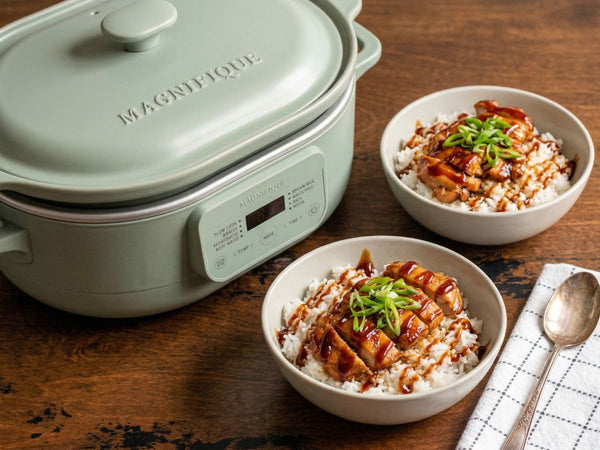
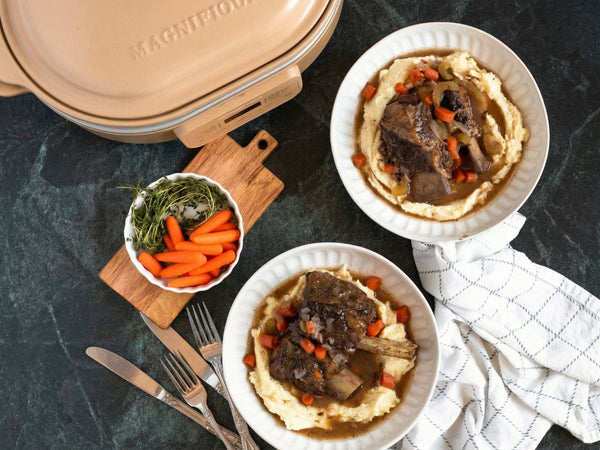
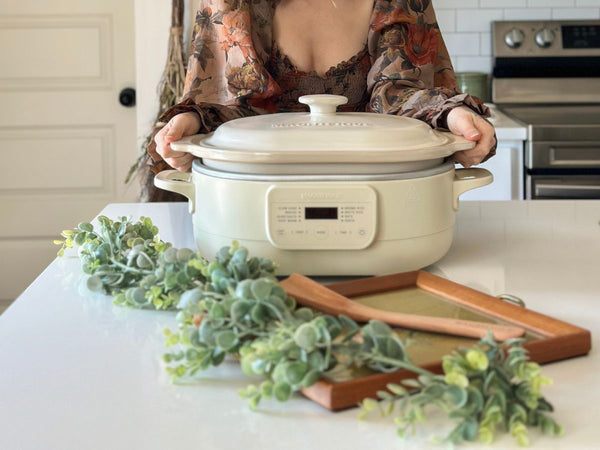
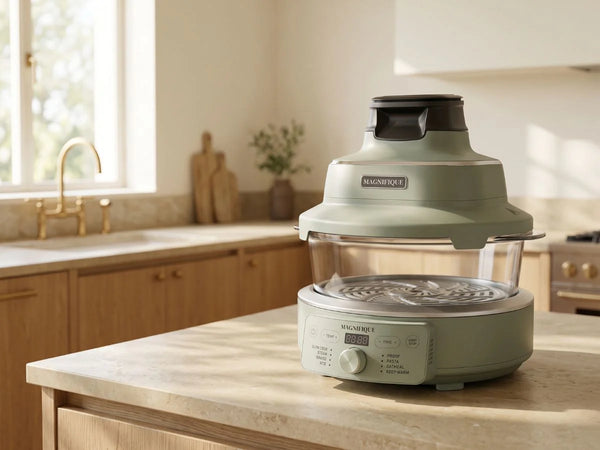
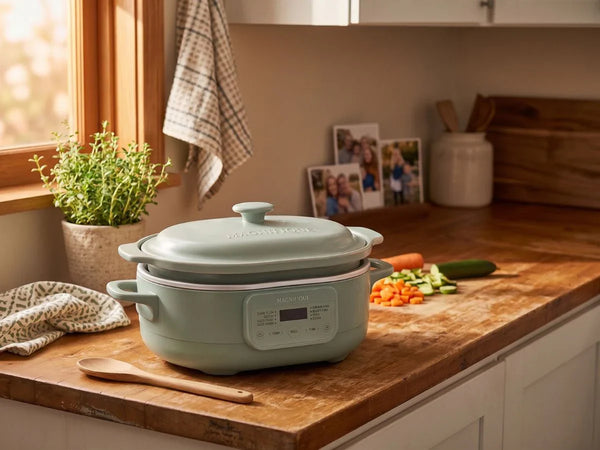
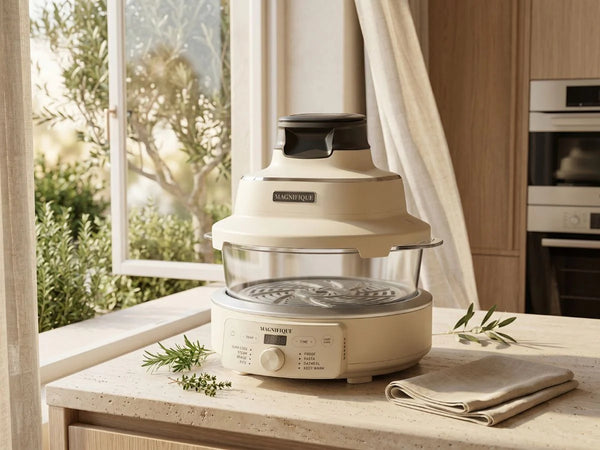
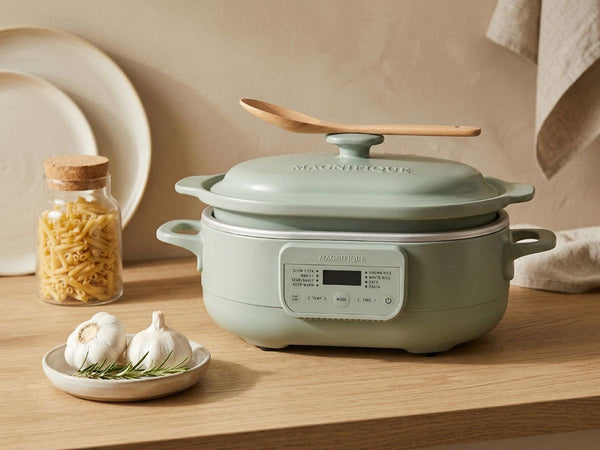
Because the technical definition of “ceramic” is inorganic, non-metallic materials hardened by heat, cookware made with 100% real clay, such as the ones from Magnifique, meets this definition and is therefore considered “real” ceramic. Unlike coated pans that use a liquid silica spray to mimic the look of ceramic, solid clay cookware is the authentic version of the material, offering a “material-first” alternative to engineered chemical layers.
The Magnifique Way
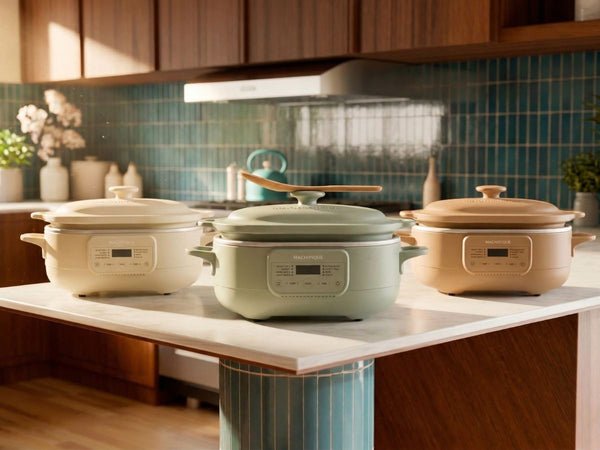
We didn’t want non-stick coatings or chemical layers that can break, flake, or degrade over time, affecting performance, flavor, and ultimately, your health. Our cookware is made from solid, naturally toxin-free materials, such as kaolin clay and stainless steel, and is independently tested by third parties for an extra layer of reassurance.
No chemical sprays, no hidden layers beneath the surface. What you see is what you cook on, today, tomorrow, and years from now.
Questions to Ask About Ceramic-Coated Cookware
When shopping for cookware, here are the questions most brands are hoping you won’t ask:
- Is this coated, or made solely from the material advertised?
- Will this company fully disclose what’s in the coating?
- Has it been independently tested by third parties?
- What happens when the surface is damaged? What does it expose underneath?
- What’s the base material? Metal base = the coating can wear off. Clay and glass = solid all the way through.
Your cookware should be as honest as the food you’re putting into it. Because your health, and the health of your family, deserve nothing less.
We believe informed choices lead to better cooking. This article references independent research, regulatory updates, and third-party analysis to help you better understand the materials behind your cookware.
Sources
The Guardian
Washington State Department of Ecology
Taylor & Francis Research Publication
For more on the materials we use and why we chose them, visit our page on Kaolin Clay and our approach to cookware design.